Showing posts with label reviews. Show all posts

Tuesday, August 23, 2022

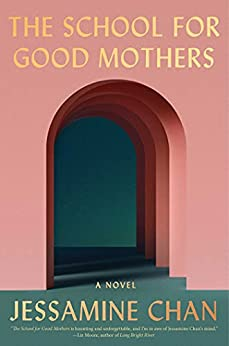
The School for Good Mothers by Jessamine Chan: Book Review


The writing was good, and the author does a great job keeping you  hooked in the story, making it difficult to put down. I liked how the futuristic/dystopian nature leaked in; a refreshing change from the modern (stated) requirement that every story reveal it's genre in the first paragraph.  The choice to omit presenting key scenes was similarly against conventional wisdom; I didn't find it worked well..

However, by the 20% mark, things were so bad for the protagonist, and clearly going to get so much worse, that I just couldn't put myself through it.  The worst for me was how the protagonist just ingests all the negativity about herself, and this definitely gets worse and worse. She has a strong character voice, but it was too depressing for me. I skipped to 95% and it was pretty much exactly where I expected. There is, however, a twist at the end which was interestingly late for novel conventions and also suprisingly hopeful.

Monday, March 2, 2020

Book Analysis: Trust Exercise by Susan Choi


When an accomplished author emulates the voice of a mediocre writer, she runs the risk of turning off readers who only see the inauthenticity or unbelievability of the story. This risk increases when it takes half of the book to come clean on the experiment--that what we thought was a complete story is really only one, flawed version, and others have different versions to tell.

That's what I heard at the meeting of the Boulder Writers Alliance Writers Who Read book club hosted by Gary McBride (His webpage features slides with links to a fascinating analysis of this novel and many more). Many participants had that experience and it made me wonder what proportion of readers were turned off by the story and never got that midpoint payoff.

Because it was a big payoff for me. Maybe it is that I love stories that turn upside down or inside out at their midpoint: when the good guys are shown to be the bad guys, or the Good Place everyone is searching for is revealed to be imaginary. This story became more interesting to me once the second narrator started picking it apart.

And then I made the same mistake again: trusting that the second narrator was telling the truth. Well, not completely, because her language made it clear that there was more subjectivity at play. But I certainly did not pick up on some of the biggest surprises in the text.

Don't read further if you want the fun of piecing together the puzzle yourself. I wish I had finished the entire book before the discussion so I'd have had time to cobble together my own theory.

Sure you want to keep reading?

Adriel Trott has a great theory: three of the male teachers are in fact the same person. One person at the book group found evidence for this in that their genitals were described similarly. Another support for this theory is that the second narrator tells us that the first broke her into several different, fake characters. Seems a lot like the author is telling us that's exactly what she did with the teachers.

This immediately raised the question to me: if the major male characters were redundant, how about the (female) narrators? It clearly doesn't work for the third narrator, as she is presented as the offspring of the second. But what if the second narrator tells the other side of the first's story, the side that is angry, the side that got pregnant and abandoned and lost her dream of greatness?

An interesting book to think about, if not entirely enjoyable to read.

Monday, January 13, 2020

2002 Reading List

As I've learned about writing I've had a hard time finding books that are compelling to read.  I just can't fall into a good book and forget the writing anymore and I've had trouble finding books with writing I admire. However, I know that reading good books is important to my development as a writer (and I do love reading), and I know there are good books out there, so I'm committing to do more reading this year.

As I blogged about, I read On Earth We're Briefly Gorgeous by Ocean Vuong through the Writers Who Read book club hosted by Gary McBride. He provides careful, thorough and (even) numerical analysis of a wide selection of books through the Boulder Writers Alliance meetup group. I will attempt to read and make his meetings, because not only do I like his selections and analysis, but I think more when I know I'll be put on the spot at the meeting to say something interesting. Asterisks in the list below denote books for the group

 I'm going to try to read one additional book per month. Sound paltry to many of you (and good for you!) but I doubt I've even read twelve books in a single year since I had kids.  I will update the list below as I start and finish books. I hope that I read more than intended, especially as I'm reading a lot of middle-grade books right now in order to get a sense of the genre, and they are quick reads.

On going (with my kids)
Wild by Cheryl Strayed
I, Eliza Hamilton by Susan Holloway Scott

January
On Earth We're Briefly Gorgeous* by Ocean Vuong. Read from 12/23-1/4.  Review
Trust Exercise* by Susan Choi

February
Ghost by Jason Reynolds, Started 1/6 (loaded to a friend on a hut trip.. on hold)
Zepheria's Call by Nathan Lowell (audiobook, ongoing...)

March
The Lady In The Lake* by Laura Lippman

April
Fleishman Is In Trouble* by Taffy Brodesser-Akner
May
Drive Your Plow Over the Bones of the Dead* by Olga Tokarczuk

Tuesday, January 7, 2020

Review: On Earth We're Briefly Gorgeous by Ocean Vuong


It was no surprise to learn that the author is a poet. The phrasing is wrenchingly gorgeous. The text is packed with figurative language and juxtaposition that forces the reader to grapple for connections.

It is also no surprise to learn the author is an academic. The fourth wall is broken, the act of writing is examined, the use of metaphor is ultimately questioned, the format is malleable, and historical and current writers are referenced.

What did surprise me was easily finding a classic three-act structure within what appeared to be unstructured text. The author even splits the books into three labeled parts. Part I is clearly family (thesis, childhood), II is romance (anti-thesis, adolescence), III brings family and lover together under the theme of death (synthesis, adulthood).

Another classic plot-driving technique the author uses is raising questions. I had a hard time putting the book down, despite there not being an obvious plot and realized that the author was using
the unstructured nature and incoherent timeline to introduce and develop characters and events in a way to keep the reader going, searching for the next tiny hint or larger answer. Who is the woman holding the girl? Who is the soldier by the road? Who is the white, teenage boy and why is he bleeding? These are the kinds of questions I've learned from Rachel Weaver that compel the reader to continue through more conventionally structured novels.  The key, though, still is character: I had to care enough about the protagonist and his friends and family to want to find out what was happening.

One of the major questions I had while reading was how much was drawn from the author's life and how much was fiction. I read an interview with the author in which he said his poems aren't always from his point of view, and indeed it is too easy for readers to assume a protagonist who matches the author in gender, race, age and apparent life situation is drawn just from that person. However, this book apparently qualifies as auto-fiction, which is somewhere between fiction and memoir.

Overall, I enjoyed reading it, it tugged on my emotions and I had no trouble finishing it, which is a significant accomplishment at this stage of my life and writing career.  (More on that in my next post!)
On Earth We're Briefly Gorgeous by Ocean Vuong

Writers Who Read book club hosted by Gary McBride. 
Click on the title (of this, and many more) for his slides containing an intensive analysis of the text.

Thursday, March 3, 2016

Review: Search and Rescue in Colorado's Sangre de Cristos


Part thriller, part how-to manual, part philosophical treatise, this collection of true stories provides a window into the realities of Search and Rescue.

Full of useful tips like how not to go off the route on descent, how to keep warm in frigidly cold environments and how to slow the bleeding from multiple head wounds, the stories leave the reader with respect for the risks inherent in the mountain environment and an understanding of just how difficult and dangerous a rescue can be.

The author shows the care and respect that the men and women of SAR have for each other, as well as for the victims who they recognize as not much different from themselves.


Goodreads
Amazon

Friday, February 26, 2016

Short Review of Good News by Edward Abbey

An interesting (and terrible) vision of the future of the American Southwest. The ending was surprising, given how the characters were clearly delineated as good and bad.

My review on Goodreads