Showing posts with label fiction. Show all posts

Tuesday, August 23, 2022

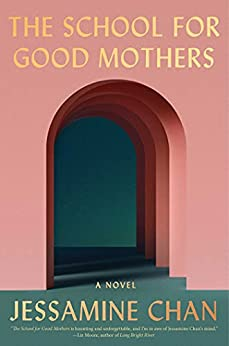
The School for Good Mothers by Jessamine Chan: Book Review


The writing was good, and the author does a great job keeping you  hooked in the story, making it difficult to put down. I liked how the futuristic/dystopian nature leaked in; a refreshing change from the modern (stated) requirement that every story reveal it's genre in the first paragraph.  The choice to omit presenting key scenes was similarly against conventional wisdom; I didn't find it worked well..

However, by the 20% mark, things were so bad for the protagonist, and clearly going to get so much worse, that I just couldn't put myself through it.  The worst for me was how the protagonist just ingests all the negativity about herself, and this definitely gets worse and worse. She has a strong character voice, but it was too depressing for me. I skipped to 95% and it was pretty much exactly where I expected. There is, however, a twist at the end which was interestingly late for novel conventions and also suprisingly hopeful.

Monday, August 27, 2018

Colorado Gold Contest Finalist

When I first went to the Rocky Mountain Fiction Writers Gold Conference in 2014, I dreamed of someday getting recognized as a Gold Contest Finalist. In 2015, the contest filled up before I got my entry in. In 2016 and 2017, I managed to enter and got very useful feedback from my judges. Finally, this year, I got the email I've been yearning for.


I'm so excited to get to wear a Finalist ribbon on my conference badge this year, and walk up to the stage with the other finalists. They will announce first, second and third place winners from the list but it is enough for me to be there. It validates all the hours of writing and money on classes that I've put in over the past five years.

Then my critique group read the current ending, and a suggestion from Dinosaur Four author Geoff Jones set my brain on a path of changes that could make it a lot better...but different. Now I have to decide if it is worth putting in the work to do this, and not having a finished book to pitch at the conference. Frustrating, but even more I'm excited to have so many issues solved at once. Updates forthcoming!

Friday, November 17, 2017

Word Cloud


 I've often thought that having a histogram of word use in my stories would be educational. Today I found a site that makes a word cloud out of an uploaded text. This is the hundred most-used words in the section I'm currently working on (section three of four total, about 25K words).

Hana and Mari are the protagonist's daughters; Jackson is the antagonist (who isn't even present in the scene so I'm glad he ranked!).

Warning signs of bad writing: looked, going, started, stop, maybe,thought, sleeping, walking... My critique group might be suprised to see that 'trudged' didn't make it in the list!

Monday, August 14, 2017

Adding Emotions to Fiction, without the beating of hearts

I've been searching for an article I read years ago about getting emotions into fiction without resorting to beating hearts or other physical reactions. Having just been told again (by the judges of the RMFW Colorado Gold contest) that my writing is lacking in emotion, I finally found it. So I'm saving it here, and figure I'll add other favorite articles to the blog, if only for my own reference.

How Fiction Writers Can Show Emotions in Their Characters in Effective Ways by C.S. Lakin

Here's my attempt to add emotion to the scene I'm writing today. Feel free to point out where I could do better (especially if you have a suggestion for how to improve!) I'd also love suggestions of books to read where the author is particularly good. s

I stopped short when a tall, brown house materialized from the whiteness ahead. It was probably a hallucination. A fatigue-induced dream. For hours—countless in the overcast, snowy night—I’d been watching fruitlessly for a shelter. At first, I’d been hopeful, scanning the hillside, barely noticing the snow deepening to cover the toes of my boots. It had crept up the ankles as I’d sang every song I knew to keep Hana distracted, to keep her moving forward. She had begged to stop and I desperately wanted to, too. Lay the tarp on the snow, fold it over to cover us. Slide into the warm, soft sleeping bags. Let our bodies rest in the cushioned warmth. But we’d have to cover our faces, somehow, to keep the snow off. Even if we could breathe under there, the hills were relentless—there was nowhere flat except occasionally right on the trail, where it hadn’t washed out. Not wide enough for three people to lie down, even if it had been a good idea to sleep outdoors in a blizzard.
Standing still allowed me to feel the cutting chill of snow inside the ankles of my boots. The snow was as deep as Hana’s knees now. It might keep coming. One spring when I was a kid, a storm had dumped eight feet of snow here in less than twenty-four hours. School had been cancelled and I’d joined with neighborhood kids digging tunnels through the streets. The memory of that joy froze like water sprayed into winter air, falling through me in icy shards. We’d had a house, back then. Not with just a fire but a furnace, with gas delivered by pipes under the house and lit automatically. A snowstorm like that, right now, right when I’d taken my girls away from the only safe place we’d known since the Collapse… we couldn’t even build a fire out here.
“Wait here,” I told the girls. I stepped one foot, then another toward the building. It didn’t disappear. I sniffed but only got frigid air. No smoke. There was no sign that anyone was in it. No footprints. No lights. Someone could still be inside. As I got closer, I could see boards nailed over the windows. The front door, up a short rise of steps softened by pillows of snow, was also boarded shut.
There was no way to tell if someone was in there without prying off the boards. I looked back at the girls, dark statues half-hidden by the thickly falling snow. If we didn’t go in this house, we’d just have to find another. It would be the same there. The only way to avoid the risk was to sleep outside. And that was risky in itself. I swallowed hard, wondering if Hiroshi would have gone in, or made camp on the tarp, snuggling together and making do on our own without the need for someone else’s house. If we did that, if we could find a flat spot, would we stay warm enough? Would we wake in the morning with five feet of snow on top of us? Or not wake at all, drifting off into a frozen sleep, hidden under the softly undulating surface until the snow melted and someone came across our bodies.

I slid my backpack to sit in the snow on the porch and extracted the hatchet. I pried the blade under a board. The nails squealed. I stopped, holding my breath for almost a minute. No sound from inside. I just had to go for it.
Sunday, April 17, 2016

Striving for a character arc

In fiction, the classic character arc has the protagonist struggling with a character flaw. The plot gives the character something they want, something that they can get only if they overcome their flaw. At the climax, of course, the character overcomes their flaw and we all go home happy.

But I've always felt drawn to stories with what might be called a circular arc: the character struggles with their flaw but is ultimately unsuccessful in changing themselves.  I believe that people do not change much and, when they do, the change is a slow process that rarely results from a single stimulus. This is backed up by research and I've wanted to express this in my writing.

These aren't popular endings, and, in fact, I'm often unsatisfied by this kind of a story. It comes down to being a cathartic exercise for the writer instead of creating a truly compelling story. But it still makes me uncomfortable to change an ending to make the story more likable.

Rather, it made me uncomfortable until I connected it to Lisa Cron's theory in Wired for Story. She says we evolved to like stories because they give us practice without having to have all the actual experiences. Could reading stories where the characters overcomes their flaw similarly be a way for us to practice overcoming our own?


Thursday, February 18, 2016

'Wired for Story' tells us why friends aren't good at critiquing.

The first thing I did after completing the first draft of my novel was to give it to my husband and three of my best friends. In fact, the drive to share it with them is what motivated me to write every day. They all gave me feedback on what they liked or didn't, what they wished there was more and less of and what they thought could be improved. Overall, the feedback was positive and I figured, after a little polishing, the novel was ready.

Imagine my surprise, then, when I put the first ten pages in front a critique group and ninety percent of the participants didn't buy the basic premise of the story. I reworked the protagonist's relationship and brought it back, receiving about the same success rate. I started the story in a new place and still got the same response. I even considered throwing out the basic concept because it seemed to be so unbelievable to so many people. Finally, I got advice from a critique partner to re-balance the risk vs consequences of the character's actions, and that seems to be working.

It left me with the question, though, of why none of my friends had questioned the premise of the story. Perhaps they were just being too kind, but they were critical in other respects. So why did four college-or-more graduates with credentials as writers, scientists and readers, miss it?

I got the answer last week when I  went to a class exploring Wired for Story, a writing book by Lisa Cron. She apparently postulates (I haven't yet read the book) that we tell and listen to stories in order to gain experience. We want to put ourselves in the protagonist's place.  When my friends read a story they know I've written, there is no barrier to slipping into my skin and believing the character's motivations as written. For strangers in a critique group, though, there is an emotional gap that must be jumped between them and the story. If the premise doesn't build a bridge, they are left standing on the other side of the river.

So now I know: friends can tell you if the story has gone too extreme (one of my common problems) or gotten too mundane (another--leave out those day-to-day boring actions) or has typos. But in order to get a true perspective on how well the character interacts wit the plot, a critique group is the way to go.

It doesn't answer the question of what to do as you become better and better friends with your critique groups, though!

References:
http://wiredforstory.com/ by Lisa Cron
Crafting a Page Turner with Michelle Theall  (exploring Wired for Story)


Thursday, December 31, 2015

Favorite books (that I read in 2015)


Although reading is one of my favorite activities, it gets shuffled behind parenting, working, housework, exercise, and now, of course, writing. But I did manage to get through a few books this year. Here are some of my favorites.

Station Eleven by Emily St. John Mandel
Dinosaur Four by Geoff Jones
Being Mortal by Atul Gawande

This is from the past but it is one of my favorite parenting books